

Family Support Systems are Essential for Older Adults
POSTED ON: July 31, 2022
How can older adults benefit from a Family Support System?
By Kathleen M. Dormody, K.D. Content & Copy, LLC, UR Community Cares, Marketing Chair Executive Committee Member
The Importance of a Family Support System for the Elderly
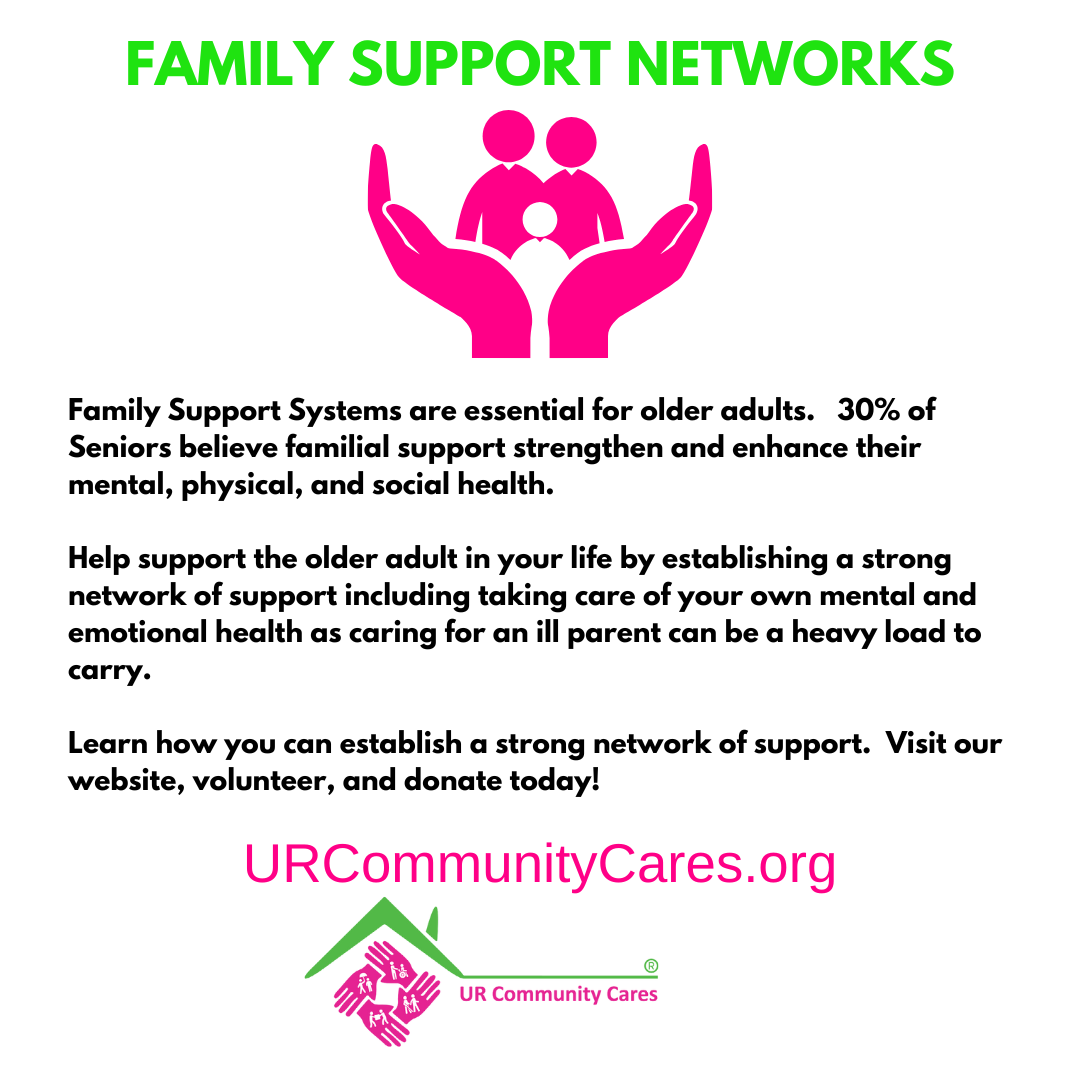
Support systems are known to provide social networks, improve one’s health, and longer life expectancy. Older adults lacking friends and family to support them lack socialization and good health; they are at risk for a shorter lifespan. According to the U.S. Aging Survey, “30% of seniors believe family is important to their mental, physical, and social health” (https://libertyhomecare.com/why-a-family-support-system-is-important-for-the-elderly/).
One of the major physical health benefits to older adults having familial support is a strong immune system allowing them to fight off disease and illness more prevalently. A major mental health benefit is better brain health and higher cognitive functioning resulting in better short-term and long-term memory and reasoning skills.
Familial support offers older adults help in completing daily tasks as well as financial and emotional support. When an older adult has no family to support them, they can still benefit from a support system through friendships.
The many ways older adults can build their social network includes:
- Community classes
- Volunteering at a local organization
The Importance of Family in a Senior’s Life
Mental and emotional health in older adults is just as important as physical health. Because older adults are more susceptible to significant amounts of loneliness, they tend to be more vulnerable to developing depression. As such, family is important in the life of a senior.
The many ways family can be a benefit to seniors includes:
- Companionship through strong relationships with children, grandchildren, and siblings
- Human interactions provide brain stimulation, improve cognitive function, and strengthened memory
- Better heart health, stronger bones, and less likelihood of obesity or cancer risk through increased physical activity
- Encouraging a Sense of Belonging
- Advocating for their needs being properly addressed by the Caregiver
What types of issues must one address when helping older parents?
Often times, when an older adult needs assistance, it is a family member that provides the necessary care whether a spouse, children, siblings, nephews or nieces, or grandchildren. “In fact, family members are by far the number one source of “long-term care supports and services” for older adults” (https://betterhealthwhileaging.net/what-to-address-when-helping-older-parents/). Typically, a family member steps in to assist an older parent because of chronic or debilitating health conditions such as dementia or stroke; it proves difficult and stressful.
There are nine main types of issues one must address when helping older parents including:
- Helping With and Instrumental Activities of Daily Living such as managing transportation, finances, shopping, home maintenance, and meal preparation
- Safety issues such as driving or falling
- Medical and Health Issues such as medication monitoring and ongoing management
- Legal and Financial Issues including estate planning and completing paperwork
- Housing Issues including whether the house is safe or a financial burden
- Quality of Life such as socialization, purpose, autonomy, and dignity.
- Planning Ahead for such issues as end-of-life care
- Managing Relationships and Family Dynamics such as teaching them better communication skills
- Self-care such as joining a support group, asking for help, setting boundaries, and allotting time to tend to one’s own health and other needs
How can family caregivers find the necessary support to effectively care for an older adult?
The Department of Elder Affairs based out of Florida administers the National Family Caregiver Support Program. They provide assistance to those caring for an older and/or ill family member including assistance in gaining access to services. Some of the many services they offer include:
- Aid
- Respite Care
- Transportation
- Caregiver Training
- Legal Assistance
- Medical Supplies and Services
- Counseling and Support Groups
RESOURCES
- https://libertyhomecare.com/why-a-family-support-system-is-important-for-the-elderly/
- https://www.homecareassistancedenver.com/how-is-family-essential-in-the-lives-of-elderly-people/
- https://betterhealthwhileaging.net/what-to-address-when-helping-older-parents/
- https://elderaffairs.org/programs-services/caregiving/national-family-caregiver-support-program/
Share This Blog, Choose Your Platform!